Order an espresso in Naples and another in Milan and you will taste two different drinks. Both will be short, both will be strong, but one may be syrupy and smoky while the other tastes rounder, browner, more like toasted bread than char. Italy is not one roast. What the good beans share is a logic — a set of linked decisions about roast level, blend, and brew method that hold together. Once you see that logic, those dark, glossy beans stop being difficult and start being useful in your own kitchen.
One country, several roast profiles
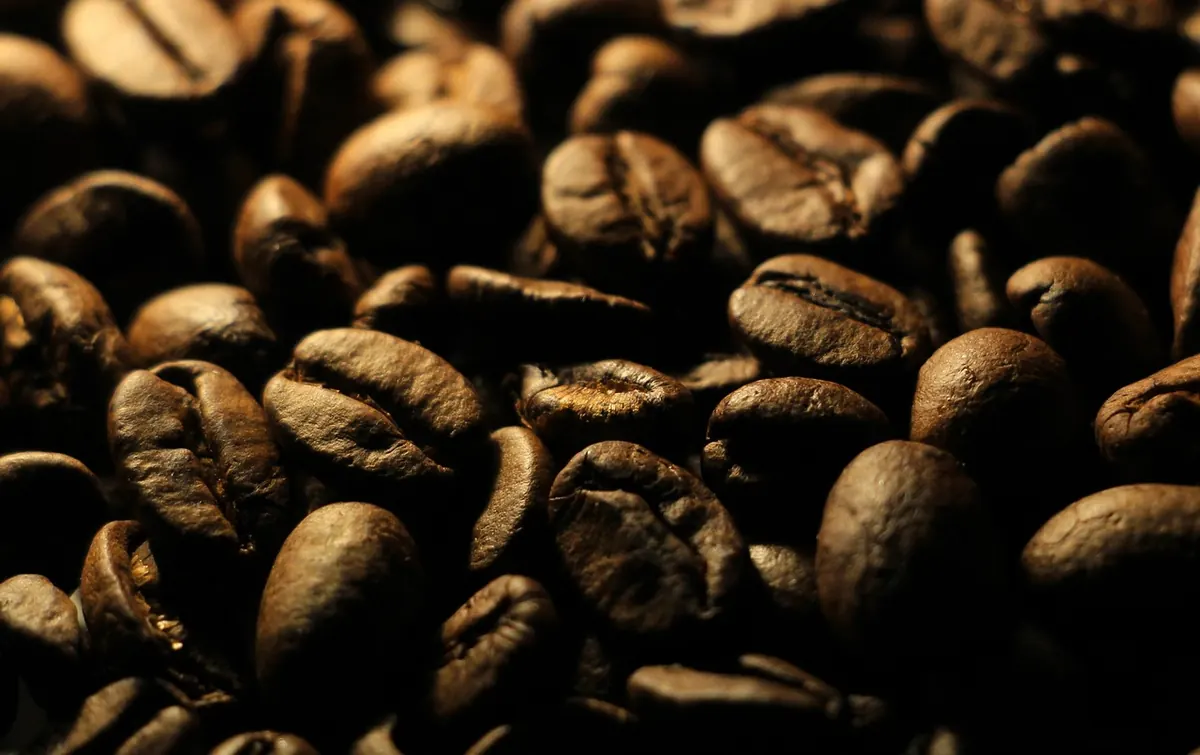
Walk into a Turin coffee bar and you will often find a medium roast, matte brown, with a little fruit still visible in the cup. Head south and the beans darken. Neapolitan and Sicilian roasts can be nearly black, with oil blooming on the surface, and the coffee is built to be intense, sweet, and short.
Blend design does as much work as roast. Traditional Italian blends commonly include Robusta alongside Arabica — sometimes a small share for crema and body, sometimes a substantial one in the south for that bitter, resinous backbone and the thick foam that holds the sugar on top. "Italian roast" as a label on a foreign bag usually points to the darkest end of this spectrum, which can be misleading: plenty of Italians drink a coffee that an American roaster would call medium-dark.
Buy whole bean where you can, and look for a roast date rather than a best-before date. With dark roasts, freshness matters in a different way, as you will see below.
What the roaster is actually changing
Roasting drives off water, browns the bean through Maillard reactions and caramelisation, then pushes into pyrolysis — the stage where sugars char and the bean cracks audibly. As the roast deepens, three things move together.
Origin fades. The citrus, red berry, jasmine and tea notes that define a Kenyan or Ethiopian coffee get flattened. A hard, dark roast can erase a farm's character almost entirely.
Roast-born flavours rise. Toasted bread, dark chocolate, walnut, caramel, tobacco, cedar. These come from the roast, not the soil, which is why a dark Brazilian and a dark Colombian can taste surprisingly similar.
The structure changes. Darker beans are less dense and more porous, with cell walls fractured by expansion. They give up their flavour compounds faster and more completely. This single fact drives almost every brewing adjustment later on.
Sweetness is not a number on the roast curve
Here is the counterintuitive part: the actual sugar content of a bean falls as the roast darkens. Sweetness peaks somewhere in the middle of the curve and then declines as caramelised sugars break down into bitter compounds.
So why does a good dark Italian espresso taste sweet? Because sweetness in the cup is not only sugar. It is a perception built from aroma, body, and the balance of acidity and bitterness. A dark roast delivers fewer acids and far more of the smells the brain reads as sweet — cocoa, dried fig, toasted almond, caramel — plus a heavy, coating texture that makes the whole thing feel rounder. Bitterness sharpens the contrast. Strip every bitter note out of a dark coffee and it does not become sweeter; it becomes flat and hollow.
The target is bittersweet. Think of a square of 70 percent chocolate: sweet and bitter at once, each making the other legible.
Roast bitterness versus brewing bitterness
Not all bitterness is the same, and telling them apart saves a lot of wasted coffee. Use your mouth as a diagnostic:
- Ashy, drying, harsh at the back of the throat: over-extraction. Grind is too fine, contact time too long, or water too hot.
- Bitter but thin, sour-edged, empty in the middle: under-extraction, or simply too little coffee for the water.
- Bitter from the first sip, with a heavy body and a long pleasant finish: the roast, and probably the Robusta. This is likely intentional.
- Sharp, sour, astringent with obviously dark beans: water too cool or grind too coarse for the dose.
A quick test: brew a small cup with coarse grounds and water around 85°C, deliberately gentle. If the cup is still aggressively bitter, it is the coffee, not your technique. Adjust your expectations and brew it for what it is.
Brewing dark Italian beans at home
The governing rule is simple: darker beans are more soluble, so they release flavour faster and overshoot into harshness sooner. Work with that instead of fighting it.
- Grind coarser. Take your usual setting for a light roast and move one or two steps toward coarser. Change one notch at a time and taste.
- Drop the water temperature. For filter, Aeropress, or French press, aim for 88–92°C rather than just off the boil. Dark roasts do not need the extra energy.
- Shorten the contact time. Three to four minutes in a French press, roughly one and a half to two minutes in an Aeropress. Steeping longer mostly adds bitterness.
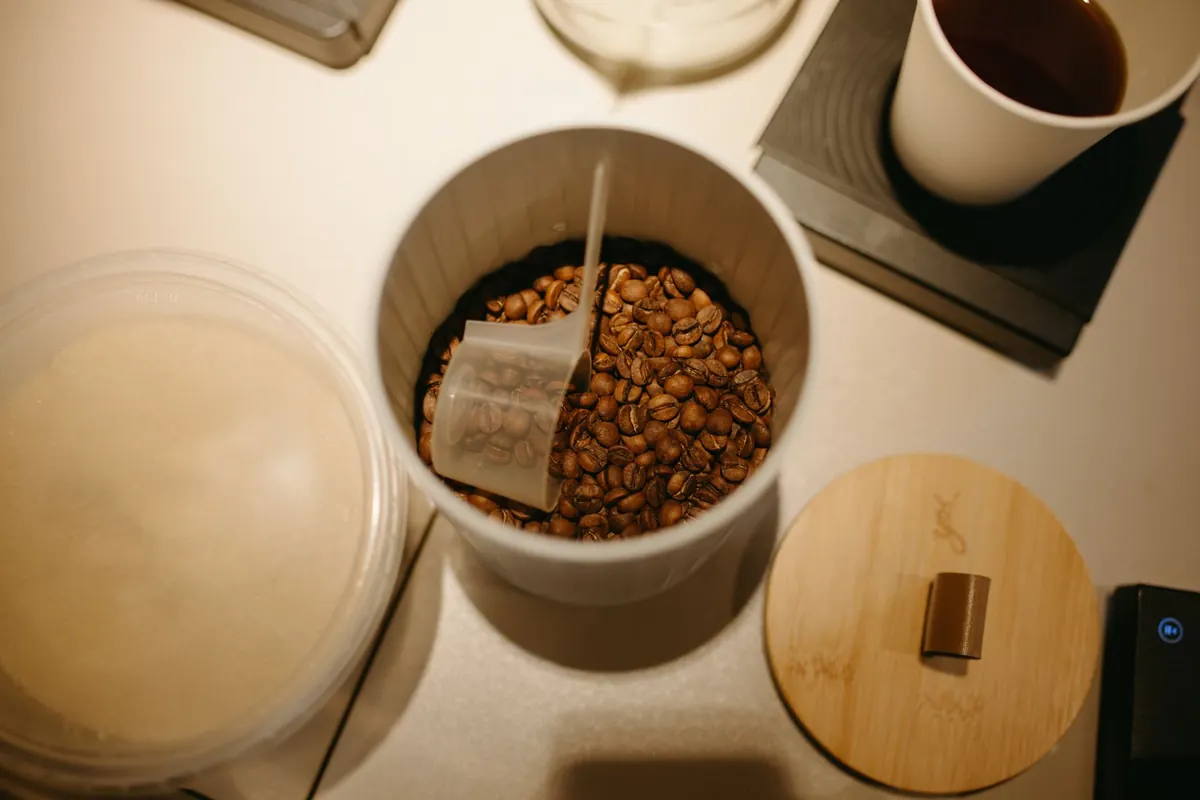
- Weigh your coffee. Dark beans are less dense, so a scoop that held 18 grams of medium roast might hold 14 grams of dark. A cheap scale removes the guesswork.
- For espresso, change grind before dose. A classic Italian-style shot runs about 1:1.5 to 1:2 in 25–30 seconds. If it is bitter and drying, coarsen slightly; do not start pulling the dose around.
- Rest, then use it up. Dark roasts degas quickly. Five to ten days off the roast is a sensible window for espresso; after about a month the oils go flat and papery. Store airtight, cool, and dark — not in the fridge.
- Clean the grinder. Surface oils cling to burrs and go rancid. A brush-out every week or two keeps dark beans tasting clean.
The moka pot, where these beans feel at home
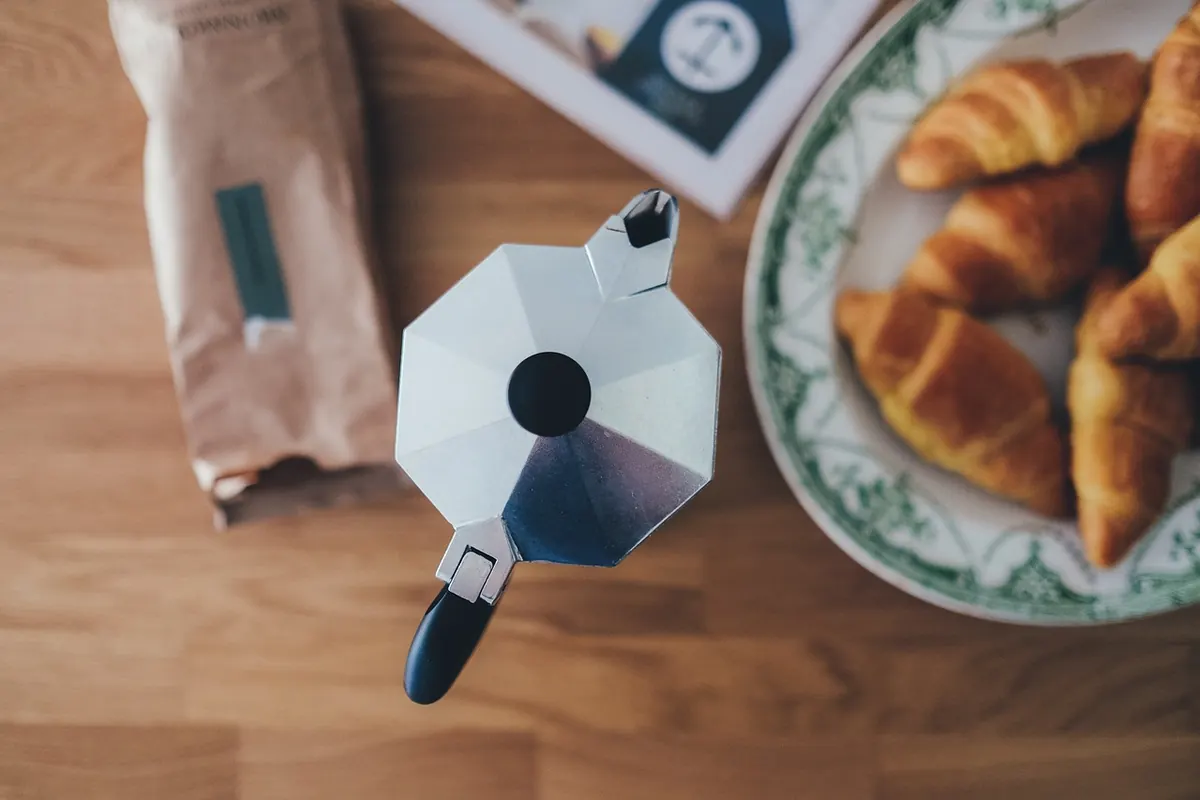
A moka pot suits a dark Italian roast better than almost any other brewer, because the coffee is built for concentration. Fill the base with water to just below the safety valve. Use a medium-fine grind — slightly coarser than espresso — and level the basket without tamping. Screw the halves tight, set it on low heat, and listen.
When the flow turns pale, thin, and starts to sputter, take it off the heat and run the base under cool water to stop the process. Stir the pot, pour immediately, and drink it small. A rough ratio of one part coffee to seven or eight parts water by weight is a reasonable place to start. If the result is harsh, coarsen the grind before you change anything else.
Start with three adjustments
If you are moving from a light roasted filter coffee to a dark Italian blend, resist changing everything at once. Coarsen the grind, cool the water, and shorten the brew. Then taste, and change only one variable the next time.
Expect a smaller, more intense cup with less acidity and a longer finish, and treat milk as a legitimate tool rather than a compromise — these roasts were designed to survive it, which is exactly why the cappuccino and the macchiato were born where they were. Serve it hot, serve it small, and let the bitterness do its job.
Photo: gosiak1980 / Pixabay